 hammad
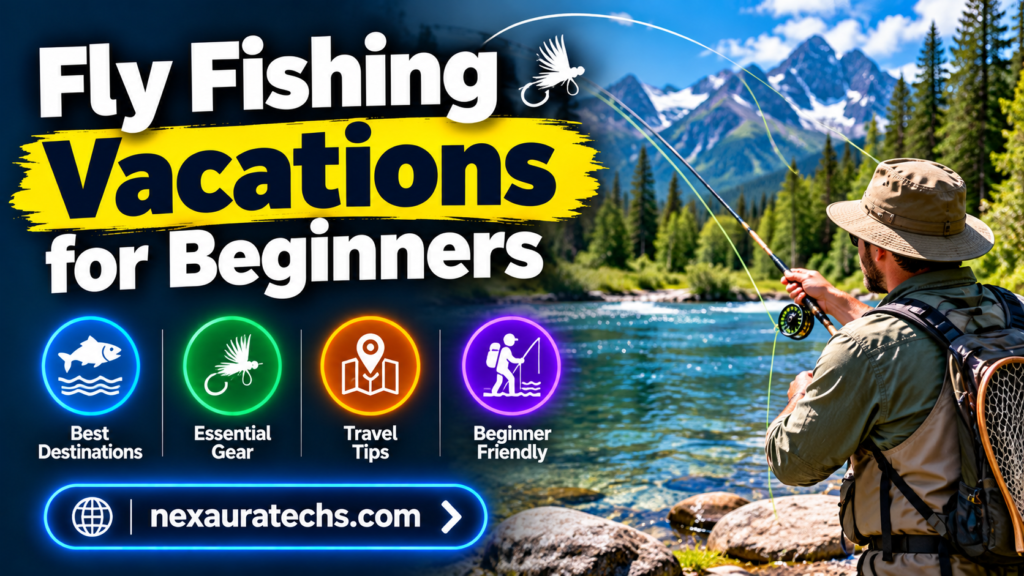
Planning fly fishing vacations for beginners can feel overwhelming. There are thousands of rivers, dozens of fly patterns, and plenty of gear that looks confusing at first glance. Fortunately, you don’t need years of experience to enjoy a great trip. Pick a forgiving river, hire a local guide, and pack the right basics, and your first fly fishing vacation can be relaxing, fun, and full of fish.
This guide covers the best beginner-friendly fly fishing destinations in the U.S., what to pack, how to plan, and simple tips that help new anglers catch more trout.

What Makes Fly Fishing Vacations Good for Beginners?
Not every famous river is a good place to learn. The best fly fishing vacations for beginners share a few key features:
- Healthy fish populations: More fish means more chances to practice hooking and landing them.
- Easy access: Wadeable banks, gentle currents, and nearby parking or boat ramps.
- Experienced local guides: A good guide teaches casting, reads the water for you, and handles the knots.
- Fly shops nearby: Local shops sell the right flies, rent gear, and share current river conditions.
- Comfortable lodging: A cabin, lodge, or small town base makes the trip enjoyable for non-anglers too.
Why Book a Guided Trip for Your First Fly Fishing Vacation
A guided trip is the fastest way to go from “never cast a fly rod” to “just landed my first trout.” For example, most guide services supply rods, reels, flies, and often waders, so you don’t need to buy expensive gear before you know you love the sport. Moreover, guides know where fish are feeding on any given day, which removes most of the guesswork.
In addition, many outfitters offer half-day trips, which are perfect for beginners. As a result, you can try fly fishing in the morning and still have the afternoon free for hiking, sightseeing, or relaxing with family.
Best Fly Fishing Vacations for Beginners in the U.S.
These destinations combine good fishing, beginner-friendly water, and plenty of guide services. According to The Old Farmer’s Almanac, Montana, Colorado, Alaska, Wyoming, and Idaho are consistently among the top states for fly fishing, but great beginner options exist all over the country.
1. Madison River, Montana

Montana is the classic fly fishing vacation, and the Madison River is one of its most famous trout streams. The long section from Quake Lake down to Ennis Lake is full of shallow riffles and runs, which is why anglers often call it the “50-mile riffle.” As a result, rainbow and brown trout spread out across this water, so beginners don’t need perfect casts to find fish.
Drift boat trips are popular here. You sit comfortably while the guide rows, positions the boat, and tells you exactly where to cast. Plus, small towns like Ennis have fly shops, guides, and lodging in one place.
2. Yellowstone National Park, Wyoming, Montana and Idaho
Yellowstone is perfect if you want to combine fishing with a family vacation. For instance, rivers like the Firehole, Madison, and Gibbon offer scenic trout fishing close to the park’s famous geysers and wildlife.
Keep the rules in mind. According to the National Park Service, anglers 16 and older need a Yellowstone fishing permit, and native fish like cutthroat trout and Arctic grayling must be released right away. In addition, hooks must be barbless, and only lead-free flies and tackle are allowed. Most park waters open in late May and close at the end of October, so check the current regulations before you go.
3. Great Smoky Mountains National Park, Tennessee and North Carolina
If you live in the eastern U.S., the Smokies offer an easy-to-reach fly fishing vacation. The park has about 2,900 miles of streams, and it’s home to brook trout (the only native trout in the Smokies), plus rainbow and brown trout and smallmouth bass in warmer water.
These are mostly small, fast mountain streams, so short, accurate casts matter more than distance. For this reason, they are great for practicing. Gatlinburg, Townsend, and Bryson City all have fly shops and guides who run beginner trips. However, a valid Tennessee or North Carolina fishing license is required, and either one covers the whole park. In addition, park rules allow only artificial flies or lures with a single hook.
4. San Juan River, New Mexico
The San Juan River below Navajo Dam is one of the best places in the country to catch big trout. Its “Quality Waters” section covers about 4.25 miles and, according to Farmington’s tourism office, holds more than 80,000 rainbow and brown trout averaging around 17 inches.
Because it’s a tailwater (cold water released from the bottom of a dam), the San Juan fishes year-round. The Quality Waters are catch-and-release only, with single barbless hooks required. However, the fish can be picky, so a guide is especially helpful here. Over time, their tips on tiny flies and drag-free drifts will make you a better angler fast.
5. White River, Arkansas
The White River below Bull Shoals Dam is a budget-friendly choice in the heart of the Ozarks. According to Arkansas Tourism, the water stays around 50°F year-round, so trout stay active in every season. Also, brown trout reproduce naturally here, and stocked rainbows are plentiful too.
Water levels change often because of dam releases, so local guides are very useful. Also, you’ll need an Arkansas fishing license and a trout permit. Finally, resorts and cabins along the river make it easy to plan a relaxed, multi-day trip.
Essential Gear for Beginner Fly Fishing Trips

If you’re fishing with a guide, they will usually provide the main tackle. If you want your own setup, Orvis recommends a 9-foot rod with a 5-weight line as the most versatile choice for trout in streams, rivers, and lakes. Here’s a simple packing list:
- Rod and reel: A 9-foot, 5-weight combo with floating line.
- Leaders and tippet: A few spare leaders and 4X–6X tippet for trout.
- Flies: Buy local patterns from a nearby fly shop. After all, they know what’s working.
- Waders and boots: Breathable waders for cold water, or wet-wading shoes in warm weather.
- Polarized sunglasses: In fact, they cut glare so you can see fish and protect your eyes from hooks.
- Layers and rain jacket: After all, mountain weather changes quickly.
- Sun protection: Hat, sunscreen, and a buff for long days on the water.
How to Plan Fly Fishing Vacations for Beginners
A little planning makes fly fishing vacations for beginners much smoother. Follow these steps:
- Choose the right season: Spring through fall works for most trout rivers, while tailwaters like the San Juan and White River fish well all year.
- Get your fishing license: Most anglers need a state license, and some areas need extra permits. Take Me Fishing explains how to buy a license online for any state.
- Book a guide early: Top guides fill up during peak months, so reserve your dates ahead of time.
- Ask what’s included: Confirm whether gear, waders, flies, lunch, and transport are covered.
- Plan non-fishing activities: Hiking, scenic drives, and local food keep the trip fun for the whole group.
- Set a budget: Factor in travel, lodging, guide fees, licenses, and a tip for your guide.
Simple Tips for Fly Fishing Vacations for Beginners
- Practice casting at home: Even 15 minutes in a park or backyard helps you feel more confident on the water.
- Listen to your guide: Simple corrections, like stopping the rod higher, improve your cast quickly.
- Focus on the drift: A natural, drag-free drift often matters more than a long cast.
- Set the hook gently: Lift the rod smoothly when the indicator or dry fly moves, instead of jerking it.
- Handle fish with care: Wet your hands, use a soft rubber net, and keep the fish in the water as much as possible before releasing it.
- Be patient: Fly fishing takes practice. Meanwhile, enjoy the scenery, and the fish will come.
Frequently Asked Questions
Do beginners need experience for fly fishing vacations?
No. Many guides specialize in teaching first-time anglers. In fact, they’ll show you how to cast, tie knots, and land fish on the same day.
What is the best time of year for a beginner fly fishing trip?
Late spring through early fall is best for most mountain trout rivers. Tailwater rivers, which stay cold below dams, can be fished year-round.
Do I need to buy my own gear?
Not usually. Most guided trips include rods, reels, and flies, and many fly shops rent waders. Then, buy your own gear once you know you enjoy the sport.
Is a half-day or full-day trip better for beginners?
A half-day trip is a great starting point. Overall, it gives you enough time to learn the basics without getting too tired. Later, if you love it, book a full day next.
Final Thoughts on Fly Fishing Vacations for Beginners
The best fly fishing vacations for beginners are simple: a forgiving river, a patient guide, and a relaxed schedule. Whether you choose Montana’s Madison River, Yellowstone, the Smokies, the San Juan, or the White River, you’ll learn quickly and make memories on the water. Pick a destination, book a guide, get your license, and enjoy your first cast.
Looking for more practical, step-by-step advice? Browse our How-To Guides for easy explainers on travel tech, apps, and everyday skills.